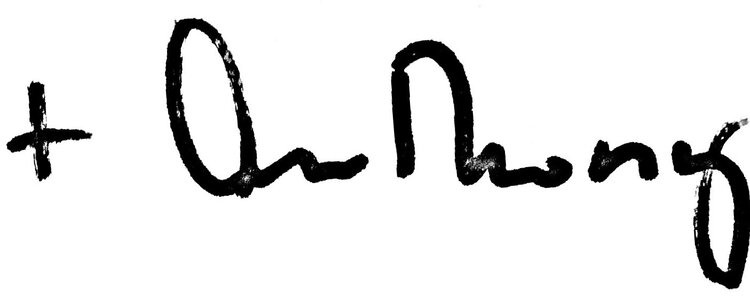

The Rev. Dr. Robert Crouse, one of the most influential Canadian theologians of his generation, died ten years ago tonight in his rural childhood home on Crouse Road, Crousetown, Nova Scotia, where his family had lived for more than 200 years. He was 80.
He had left the house 70 years before to attend King’s Collegiate School in Windsor, Nova Scotia, where he would later be judged the most brilliant student in its 263-year history. Academic distinction followed, with degrees from King’s, Tübingen, Toronto, and Harvard; and teaching posts at the universities of Harvard, Toronto, Bishop’s (Lennoxville), and Dalhousie. He taught for 32 years at King’s College.
A world authority on Augustine and Dante, he was in great demand internationally as a lecturer. For many years he served as the first non-Roman Catholic visiting professor at the Augustinianum of the Pontifical Lateran University in Rome. With James Doull he established a school of thought concerning the theological tradition of the ancient and medieval worlds that now has an international following.
Many of his students discovered in themselves a vocation to holy orders. His sermons continue to be a touchstone for preachers around the world. For all that, it was neither his academic career nor his tireless voluntary service to the Church that set him apart from his generation. A master without a masterpiece, it was his personality that affected so deeply those who knew him.
He was a quiet, somewhat shy man with a deep, smoky voice, a wide range of interests, a great depth of knowledge, and a twinkling, mischievous wit. He rescued the last tracker organ in Nova Scotia, installed it in his tiny rural church and started a baroque concert series that has attracted musicians to summer concerts for 47 years. About the same time he started a university choir that continues to flourish.
Later he would help found an annual theological conference, an academic journal, and a publishing house, all of which survive him. He gave popular talks on theology as it was embodied in the church architecture of Europe which he loved to explore, camera in hand. In his idyllic garden he cultivated 129 varieties of roses, and a vast collection of herbs and rare plants from which he would produce for his friends salads of 30 or more ingredients.
His roommate at Harvard was Tom Lehrer, who wrote “The Vatican Rag” and set the Periodic Table of Elements to song. Crouse shared this sense of fun. With encouragement (and his friends encouraged him often) he would oblige with a comic ditty or incorrect old anthem like the “Maple Leaf Forever.”
He had a great gift for friendship. To children he was comfortable as an old sweater, to those who sought him out for spiritual counsel he was the kindliest of fathers, to his students he was a velvet hand in a velvet glove — invariably merciful on those whose essays came to him late.
The whole was greater than the sum in this man of many parts. It was the interrelation of those parts that inspired people to want to be around him. While uncommonly rooted in one place, his primary community was neither Crousetown, nor the Canadian Church, nor the Anglican Communion but the Church throughout time. One had a sense that as he celebrated the Eucharist the entire spiritual world opened up before him. Paradoxically it was exactly this relation to the Church catholic that rooted him to his particular community, denomination and theological tradition.
He was not the kind of Anglo-Catholic who would set aside the insights of the Reformation, but saw them as necessary moments under the providence of God for Christian theology. He understood that piety, liturgy, and philosophy depend on each other. Philosophy would be abstract without liturgy: liturgy put before the mind of the worshiper authorized images to be employed by the Holy Spirit in the soul.
His home was famous for its hospitality, wonderful food, wine and conversation. But most of the time it was effectively a hermitage, without telephone, internet, television or radio: carved over the mantelpiece were the Latin words St. Bernard chose for his monasteries: “The solitary place shall be glad, the desert shall rejoice and blossom as the lily … and a highway shall be there and a way, and it shall be called the way of holiness” (Isa. 35:1-9).
A contemplative, Crouse understood that material things conceal in their depths a sign of their divine origin. His contemplative life was the hidden wellspring in him to which so many were instinctively drawn. His old colleague Wayne Hankey, to whom I owe some of these observations, wrote on his passing: “No student of his ever ceases to hear him and so to walk in the presence of the Logos.”
In a dissolving civilization he was an unmovable force for stability, prophetic in his determination to refocus the Church he loved on things heavenly and eternal.
When he preached at my consecration, he spoke of Gregory the Great:
“In the midst of the unsteady flow of time,” said Gregory, “the man of God knows how to keep steady the steps of his mind” (Moralia in Job, xxxi, 28, 55). But just how is that possible? I think the Venerable Bede penetrated the secret of it, when he reported how Gregory, “amid the incessant battering of worldly cares,” strove to be “fastened, as by the cable of an anchor, to the peaceful shore of prayer” (Historia ecclesiastica, II, I).
Happily, Elliott House is undertaking a major publication project of his writings for the generations to come.